How Tatiana Andronova turned Telegram mechanics into a design warm-up

Author
Tatiana Andronova
How Tatiana Andronova turned Telegram mechanics into a design warm-up
Design Warm-ups was built around a simple idea: designers learn better when they do the work, not only read about it.
One of the early experiments behind the project was created by Tatiana Andronova, founder of Design Warm-ups. She wanted to find a way to turn a Telegram channel from a passive content feed into a place where people could actually participate, coordinate, make decisions, and influence the result together.
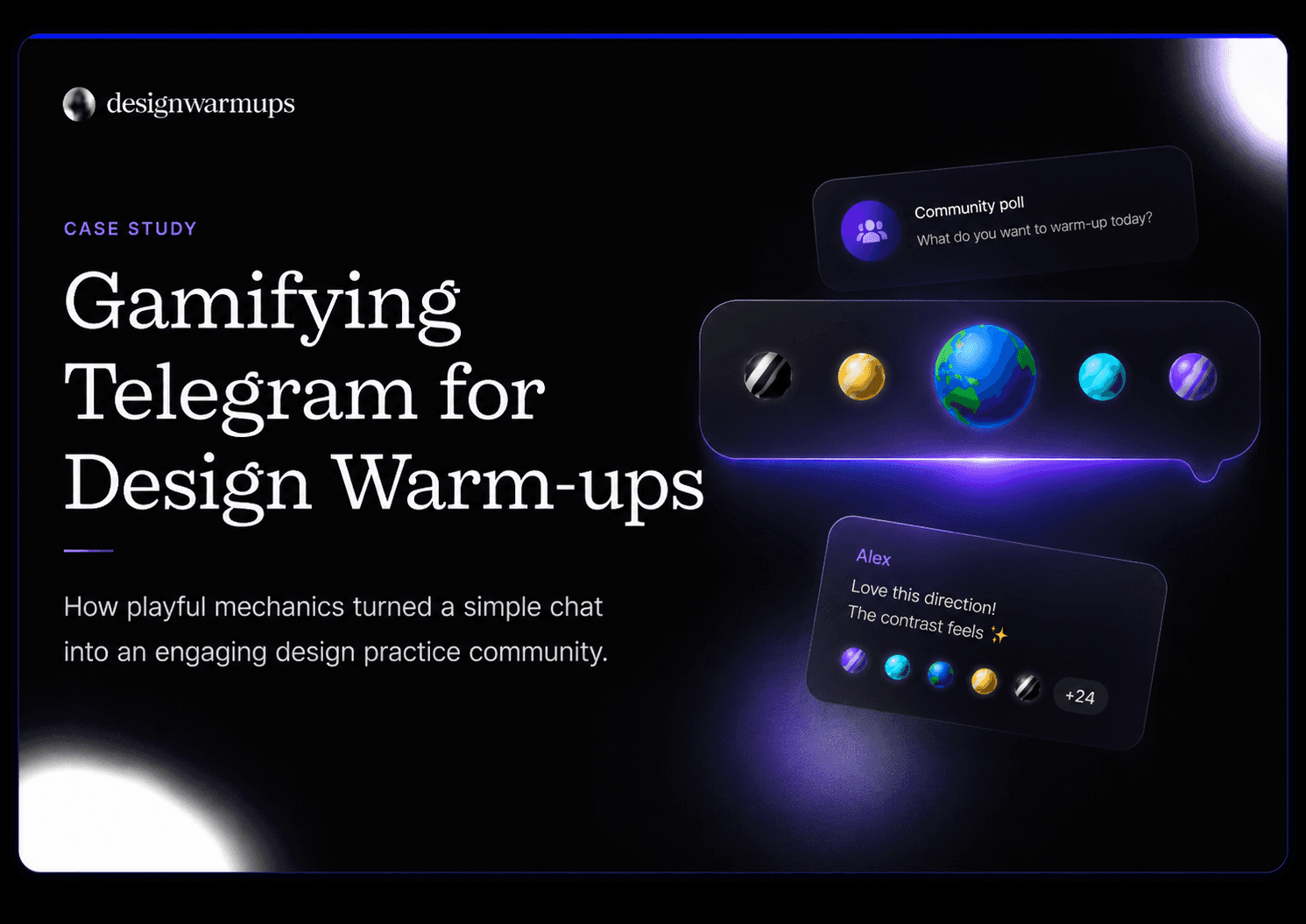
Instead of using a standard contest or a simple poll, Tatiana came up with a small gamified mechanic inside Telegram.
The idea behind the experiment
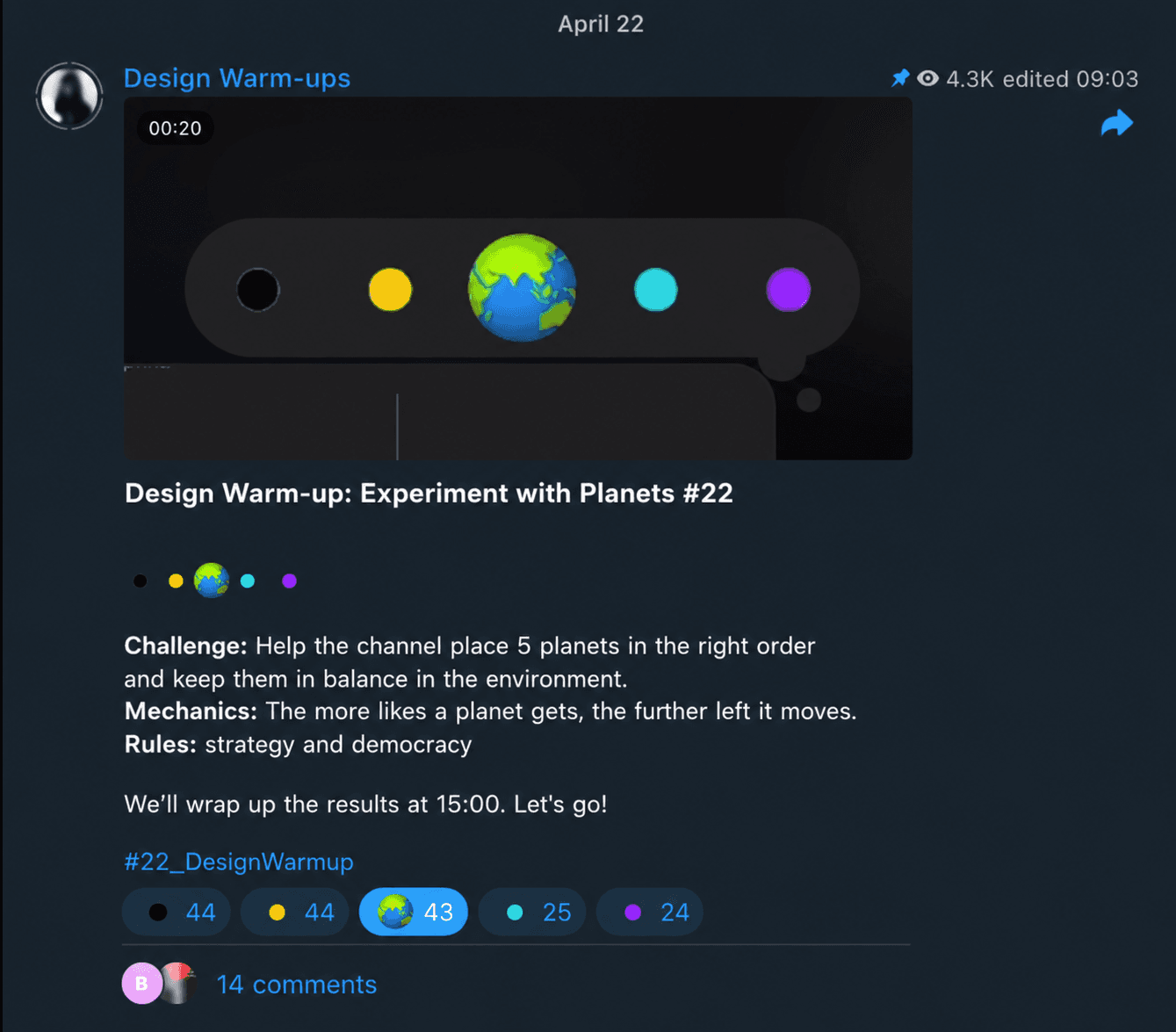
The goal was to create a design warm-up that would work directly inside the channel and use Telegram’s native behavior: reactions, likes, comments, and community coordination.
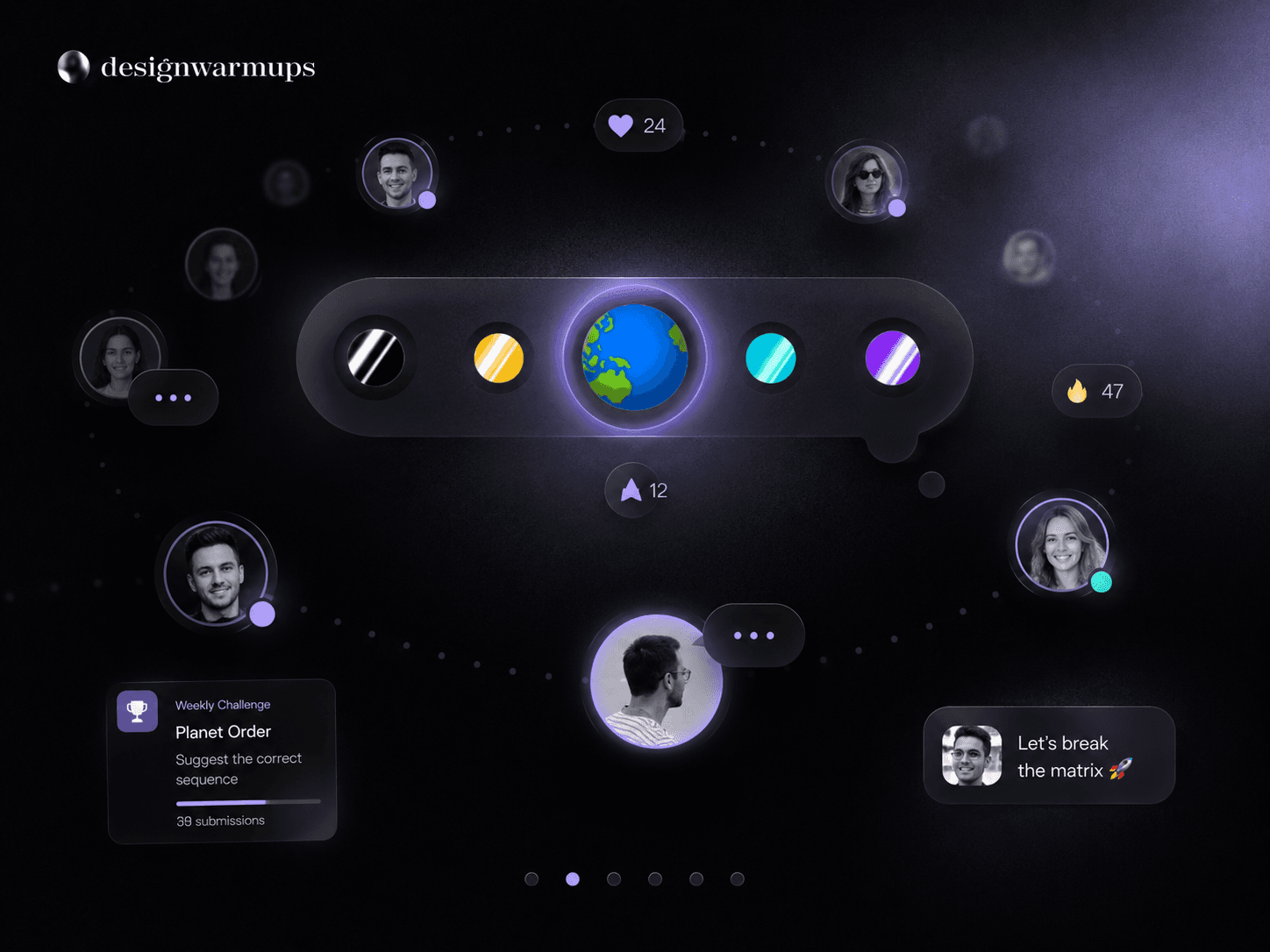
The task looked simple at first. Participants had to arrange a set of planets in the correct order. But there was a twist: the position of each planet depended on how many reactions it received.
The more reactions a planet got, the further it moved.
This turned a simple visual task into a collective system. People had to discuss the order, decide which planets needed more reactions, coordinate in the chat, and keep the result stable over time.
Why it worked
The mechanic worked because it gave people a reason to act.
Instead of just looking at a post, participants could change what was happening. Every reaction mattered. Every discussion in the chat affected the final state of the warm-up.
The channel became less like a broadcast and more like a shared interface. Participants were not only consuming content — they were using the channel as a tool.
That was the key idea: use the platform itself as part of the design exercise.
From content to participation
Many educational communities face the same problem: people subscribe, save posts, and read materials, but they do not always practice.
Tatiana’s experiment showed another direction. A warm-up can be built not only as a task, but as a live interaction where the community becomes part of the mechanics.
This is what makes Design Warm-ups different from a regular content channel. The focus is not only on publishing useful materials, but on creating formats where people can try, discuss, compare, and learn by doing.
What this says about Design Warm-ups
Design Warm-ups is a practice-first community for designers, product teams, and people who want to develop better product thinking.
The project creates small but meaningful tasks that help participants train creativity, decision-making, visual thinking, and communication.
Some warm-ups are more visual. Some are closer to product logic. Some are playful. But the main principle stays the same: real learning happens when people make decisions and then reflect on them.
Tatiana’s Telegram experiment became a good example of this approach. It showed that even a simple platform mechanic can become a learning tool if it is designed with participation in mind.

Why we keep building this format
For us, Design Warm-ups is not just a collection of tasks. It is a way to create a living environment where designers can practice regularly, see how others think, receive feedback, and feel part of a professional community.